Avoided GHG Emissions
7,690 t-CO2e

7,690 t-CO2e

9,373 m3
※Covering merchandise resold through ALLU, STAR BUYERS AUCTION, and ALLU AUCTION between September 2024 and August 2025.
The luxury brand products we sell, including watches, jewelry, and bags, are often passed from one generation to the next, thanks to carefully selected materials and advanced manufacturing techniques. We believe that the redistribution of such products through resale reduces the environmental impact of society as a whole (environmental value) and reduces the environmental impact associated with new resource extraction and manufacturing.
Valuence encourages merchandise circulation through brand resale, providing a mechanism to maximize the useful life of a product, rather than ending its role after a short lifespan. We have defined Resale Impact as a metric to quantify and disclose the environmental value created by brand resale across society based on an avoided emissions calculation methodology. We call this metric Resale Impact.
By disclosing this indicator, we contribute to the understanding and wider adoption of the concept and calculation method of avoided emissions. Our clear communication of the environmental value of resale services to consumers encourages environmentally conscious choices and behavioral change.
Avoided emissions is a quantified environmental value to society as a whole, arising from the provision of products and services that reduces GHG emissions in society. Studies are underway in Japan and abroad on the definition, methods of calculation, and means of disclosure. Several guidelines have been established in this context. However, as opposed to Product Category Rules (PCR), detailed and standardized calculation rules for avoided emissions have not yet been established in many industries, and no unified methodology exists in the resale sector.
Since the Valuence resale services cover a wide variety of products—watches, jewelry, and bags, etc.—and we engage in hundreds of thousands of transactions per year, we do not believe it is practically feasible to conduct a separate and precise assessment for each transaction.
Given the circumstances, we use a calculation methodology based on actual transaction data retained internally and designed for ongoing practical use. Our methodology does not rely on the assumption that resale uniformly replaces the purchase of new products. Rather, we assess changes in environmental impact in terms of extended product life.
The methodology for calculating avoided emissions on this page is based on the resale service avoided emissions calculation framework developed by ZEROC Inc., an LCA consulting firm. We have asked Professor Ichiro Daigo of the Research Center for Advanced Science and Technology, The University of Tokyo, to conduct an outside expert peer review of our methodology. After consideration, we incorporated certain matters raised into our methodology, the results of which we communicated to the peer reviewers.
■ Baseline
Fashion items used by a single user without being resold
■ Assessment Targets
Fashion items that are repeatedly resold over the useful life of the product and used by multiple users
Per year of use
We consider the full life cycle from raw material procurement and manufacturing, distribution, use, and disposal. The use phase to be assessed includes the resale process (maintenance, repair, and transportation for resale). We exclude from the calculation (cutoff) indirect impacts associated with store lighting, construction, and indirect departments.
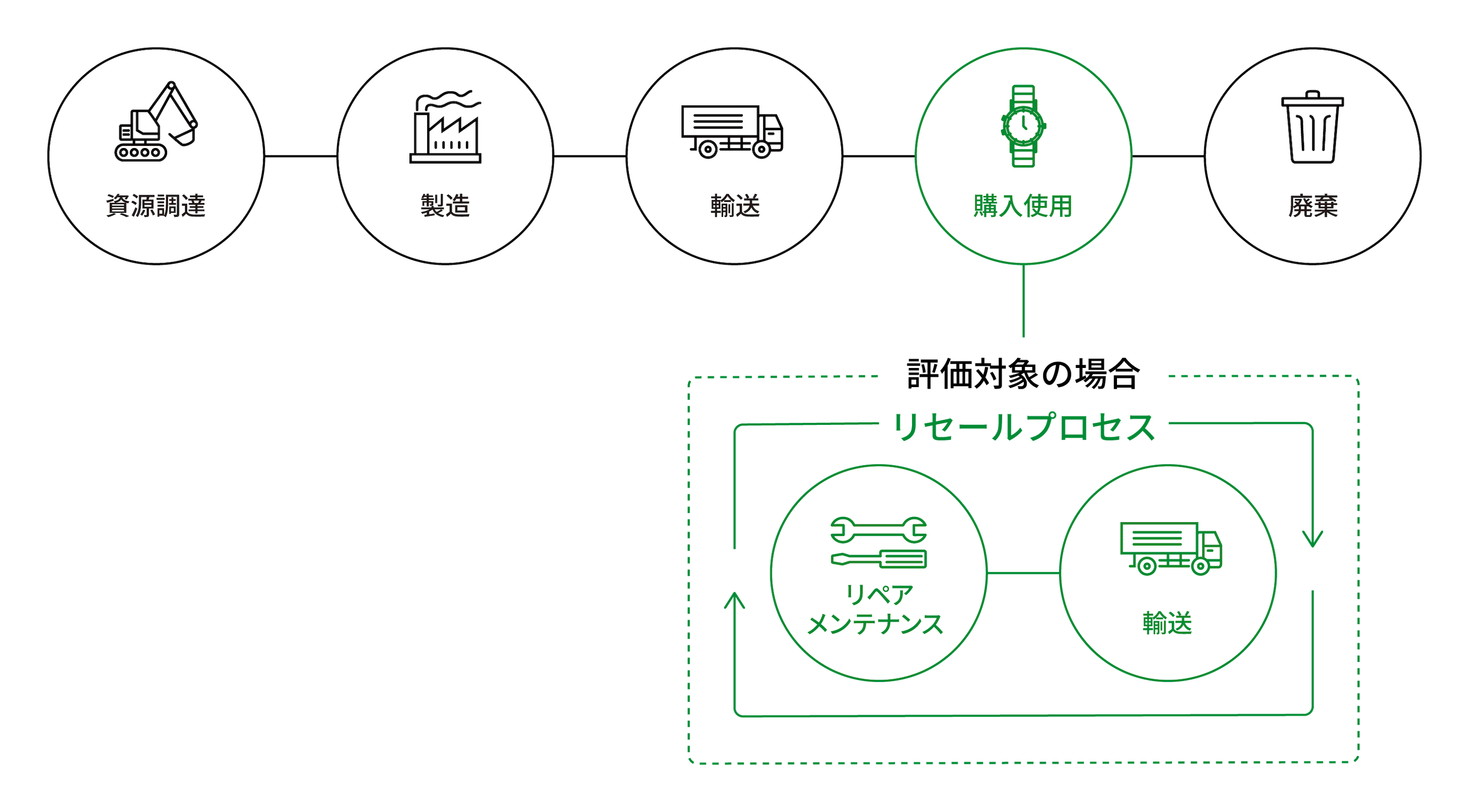
Watches, jewelry, and bags account for a large percentage of resale sales value. Therefore, we conducted a questionnaire survey (3,947 valid responses) of customers whose purchases were completed at domestic purchasing locations, using the data to determine the number of years of use.
*For other categories, we base useful life on a literature review.
We calculate resale frequency based on a scenario that takes into account the useful life and average sales period of the product.
Watches and jewelry incorporate precious metals, which are raw materials with a particularly large environmental impact. Accordingly, we determine a metal content ratio for each major material by referring to the labeling regulations of the Japan Jewelry Association and official data. The percentage of recycled raw materials at the raw material procurement stage is based on official statistical data.
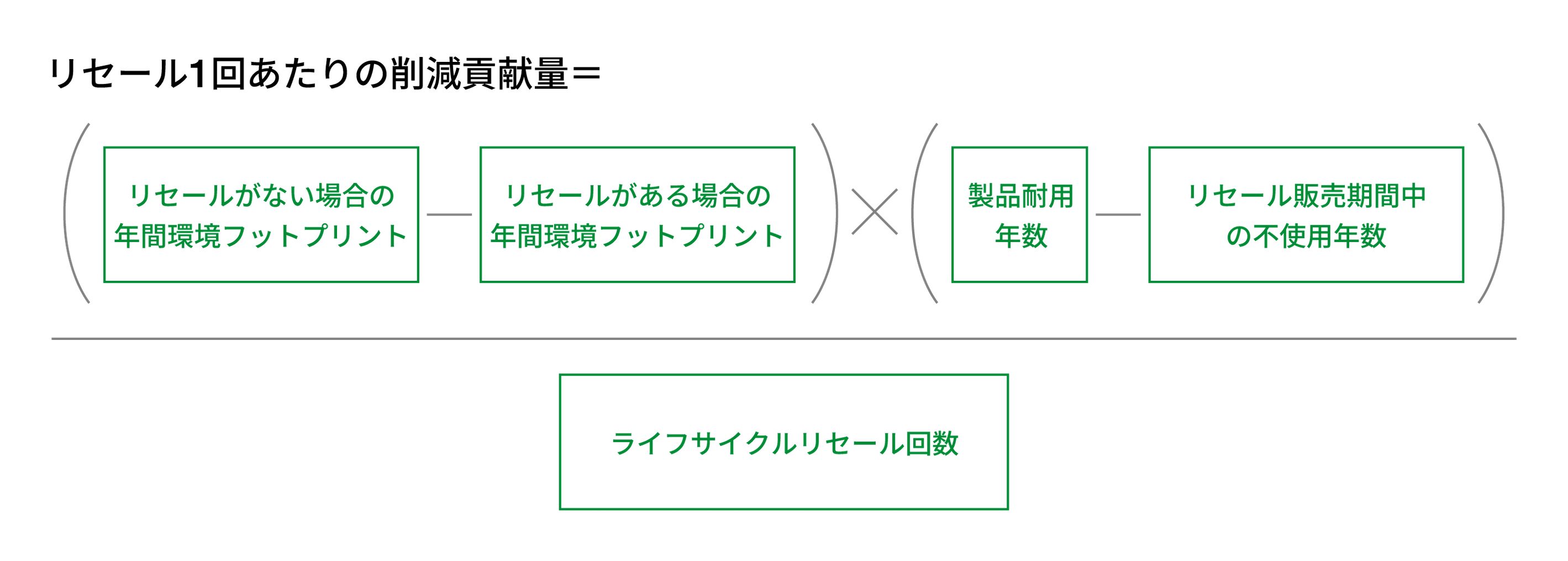
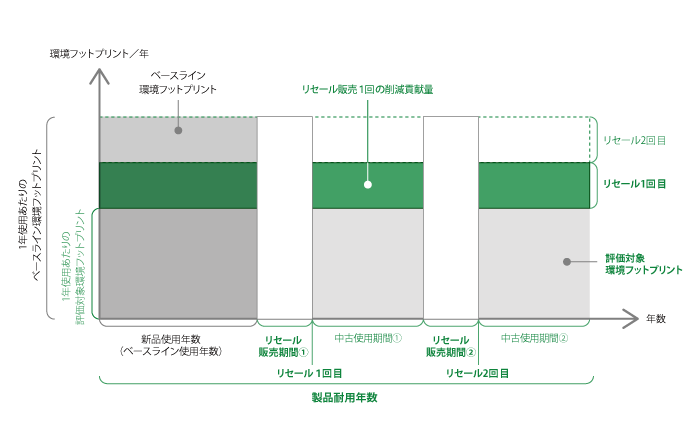
Our avoided emissions methodology assesses the effectiveness of resale services in avoiding environmental impacts associated with the manufacture and disposal of new products.
Therefore, we use a contribution ratio of 100%, as the main cause of the reduction is the resale service itself.
When you visit any web site, it may store or retrieve information on your browser, mostly in the form of cookies. Control your personal Cookie Services here.